
Ten clients added you on WeChat and not one booked
Out of twenty people who message us on RedNote, one buys lessons. Why a silent first wave of private clients says very little about your teaching.
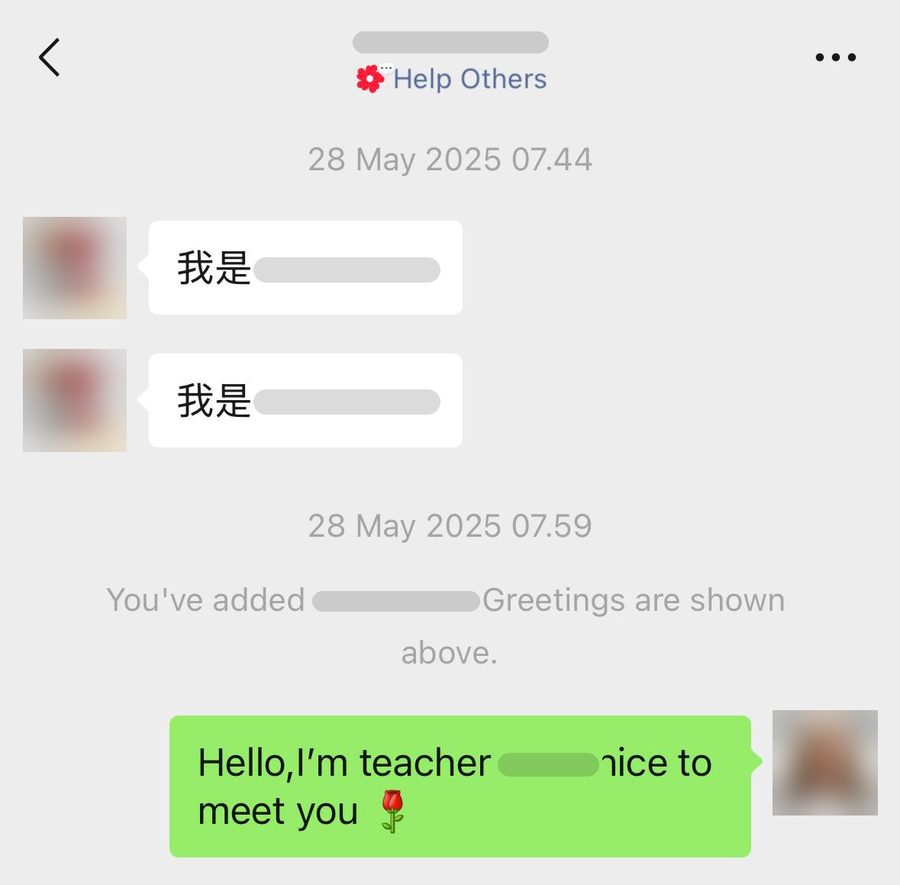
We taught on platforms for years before we started working with Chinese families directly, and the first time ten people added us on WeChat in one day, we honestly thought we’d made it. A week later not one of them had booked anything, and we spent an embarrassing amount of time rereading our own messages, trying to find the sentence that scared everyone off.
There wasn’t one. It took us a few more waves to figure that out.
What actually happens, almost every time
These are our real numbers, and they’ve barely moved in five years.
From our own chats
Our numbers, almost every time
-
-
−10
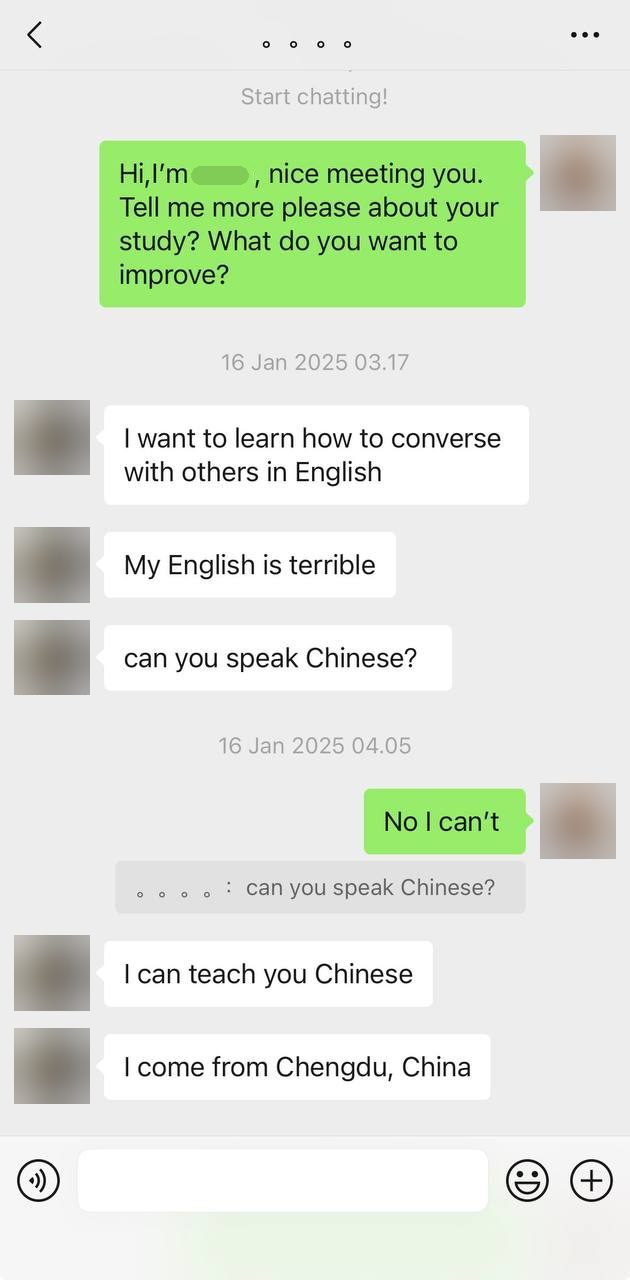
“Can we just chat in English? For free?”…or they only wanted a foreigner in their contacts
-
-
−7
“ok”…but mostly silence once they hear how lessons work and what they cost
-
-
−1
“Oh, teacher, sorry, we forgot!
 ”the classic: one family always forgets, or never took it seriously
-
-
−1
“Too expensive.”…or a good demo, and then silence
-
When we first counted it out, it felt pretty bleak. Now it’s the thing that keeps us calm, because it means a phone full of silent WeChat contacts is completely normal. And yes, the “Oh, teacher, sorry, we forgot! ” really comes with almost every wave. If you offer a new date, there’s a decent chance that one gets forgotten too; at this point we treat it as a tradition.

Most of those twenty were never choosing a teacher
The biggest drop happens before you’ve done anything. Adding someone on RedNote costs one tap and ghosting them costs nothing, so a big wave of messages mostly means a lot of curious people saw your post. That’s good news about your posts, and it says nothing yet about whether anyone is ready to pay.
The price is where it hurts
The drop from ten to three comes right after you mention the price, so it’s very easy to read the silence as “you’re too expensive.” If a platform has just cut your rate, it can feel like proof that you’re worth even less out here.
In our families it almost never meant that. Someone who hears your price in the first chat hasn’t seen anything yet: not their kid laughing at your jokes, not the way you fix a sound without making a big deal of it, not their shy son suddenly answering in full sentences. At that point you’re a stranger with a number next to your name, and your years of experience don’t show up in a WeChat bubble. Some people go quiet because they’re comparing teachers, some need to talk it over with the family, and some were only ever browsing.
Leaving a platform? Our free Lesson Package Calculator turns your own lesson price into packages of 10, 20, 30 and 100 lessons, with the package terms already written in English and Chinese. Get it free
What the platform never showed us
Honestly, we blamed ourselves. We had thousands of lessons behind us, so it had to be the accent, or the profile, or the way we answered.
What we didn’t realize is that the platform had always hidden this part. Someone else talked to all the families who never booked, and we only ever met the ones who did. Going direct was the first time we saw the whole path, including the nineteen people who leave, and nobody had warned us it would look like that.
The one family that stays is worth more than it looks on that chart. Some of ours have been with us for years, and no platform gets to cut your rate for them, fine you for a late report, or quietly hand them to another teacher. The nineteen who left cost us an evening of replies; the ones who stayed are the work we actually live on.
We still check WeChat a bit too often when a new wave comes in, and an “ok” with nothing after it still stings for a second. It just doesn’t make us doubt our accent anymore.
Next in this series: Why Chinese clients go quiet after the price, and when they come back.